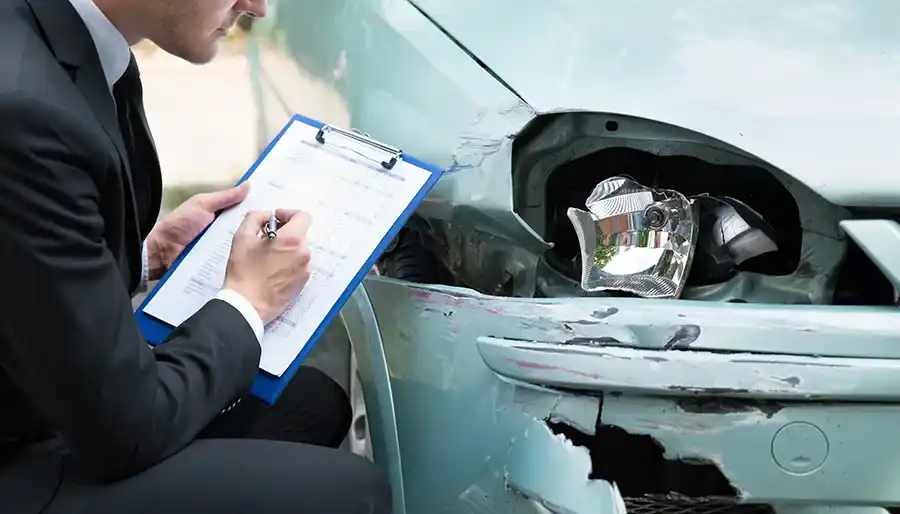
The deer came out of nowhere. One second I was driving home from a late shift at the hospital, cruising down I-70 at 65 mph, singing along to a song I can't remember. The next second, there was a brown flash, a sickening thud, and the sound of my own car dying. The deer — a massive buck, probably 200 pounds — rolled over my hood, smashed my windshield, and disappeared into the darkness. My 2017 Honda Civic, which I had owned outright for three years, was a wreck. And I had dropped collision coverage six months earlier to save $900 a year.
I'm Dr. Sarah Mitchell. Yes, the same name as the sleep researcher from bedtimecycle.com, but I'm a different Sarah Mitchell — an emergency room physician in Denver, Colorado, who runs coveragecheckr.com because I learned the hard way that insurance is not a place to cut corners. This story is about the $900 that cost me $8,000.
The decision to drop collision seemed rational at the time. My car was worth about $8,500 according to Kelley Blue Book. The collision coverage was $75 per month, or $900 per year. The deductible was $1,000. So the most the insurance would ever pay was $7,500, and I was paying $900 a year for that protection. The math suggested that if I went eight years without an accident, I would have paid more in premiums than the car was worth. I had gone eight years without an accident. I thought I was a safe driver. I thought I was being financially savvy. I thought wrong.
The deer didn't care about my math. The deer didn't care that I had a clean driving record, that I had never filed a claim, that I was a careful person who always used turn signals. The deer cared about crossing the road, and my car was in the way. The damage was catastrophic: crushed radiator, bent frame, deployed airbags, shattered windshield, and a hood that looked like a crumpled aluminum can. The tow truck driver took one look and said, "That's totaled, doc."
The repair estimate was $7,200. The salvage value was $800. The total loss was $6,400 out of my pocket. Because I had dropped collision, my insurance paid nothing. Not the tow. Not the rental car. Not the repairs. Not the replacement. I had saved $450 in premiums over six months. I had lost $6,400 in one night. The savings were a joke. The loss was real.
I spent the next three weeks dealing with the aftermath. I had to buy a new car — not new, but new to me — which meant taking out a loan I hadn't planned for. I had to pay for a rental car out of pocket while I shopped. I had to take time off work to deal with insurance paperwork that went nowhere because there was no claim to file. The stress was almost worse than the financial hit. I couldn't sleep. I kept replaying the moment of impact. I kept thinking: if I had just kept the coverage, this would be a phone call and a check.
The 2026 insurance market has made this mistake easier than ever. Companies are aggressively marketing "liability-only" policies as a way to save money, especially for older cars. The ads show happy families saving hundreds of dollars a year. What they don't show is the family standing in a salvage yard, staring at their totaled car, realizing they have no way to replace it. The savings are immediate and visible. The risk is distant and invisible. Until it's not.
I talked to my insurance agent after the accident — a different agent, because I switched companies out of spite. She told me the rule of thumb: keep collision until your car's value drops below $4,000, or until the annual premium exceeds 10% of the car's value. My premium was $900 on an $8,500 car — 10.6%. I was right at the edge. But the edge is a dangerous place to stand when a deer is running toward it.
The tools on this site exist because I needed them. The coverage gap analyzer shows you what you're actually protected against. The collision vs liability calculator tells you the mathematical break-even point. The car value tracker keeps you updated on whether your vehicle is still worth protecting. These tools don't tell you what to do. They tell you what you're risking. And sometimes, that's enough.
If you're thinking about dropping collision to save money, ask yourself: can I afford to replace this car tomorrow? If the answer is no, keep the coverage. The $900 you save might feel good in the moment. But the $6,400 you lose will feel a lot worse. Insurance is a bet you make with the universe. And the universe doesn't care about your spreadsheet.
Can you afford to write a check for your car's value today?
