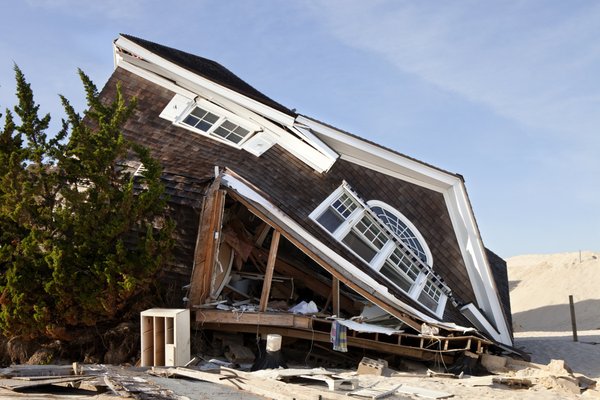
My wife said, "We have homeowners insurance. Why isn't flood covered?"
I remember exactly where I was standing. Kitchen. Wednesday evening. A pan of something burning on the stove because I’d gotten distracted by the news. She was holding her phone, showing me a video from her friend’s basement – water up to the third stair, a small rowboat floating where the couch used to be. That storm had dropped four inches of rain in two hours. Sewers backed up. Rivers swelled. And not a single one of those homeowners had flood insurance.
I was still working in underwriting at the time. I knew the answer. But explaining it to my wife – and then to her friend – made me realize how broken the system is.
“Because,” I said, “standard homeowners policies exclude water that comes from outside. Groundwater, surface water, sewer backup, flood – all excluded. You have to buy a separate policy or endorsement.”
She stared at me. “Why doesn’t anyone tell you that when you buy the house?”
Good question.
Our own house was in a low-risk flood zone. Zone X. That meant no mandatory purchase requirement from our lender. But low-risk isn’t no-risk. According to FEMA, about 25% of all flood claims come from properties outside high-risk zones. A one-inch flood in a finished basement costs about $25,000 on average. Most people don’t have that kind of cash sitting around.
I checked our policy that night. No flood. No sewer backup. We had a sump pump, but if the power went out or the pump failed, we were on our own.
I bought the endorsements the next morning. Sewer backup cost me about $65 a year. A separate NFIP flood policy – even though we were Zone X – cost about about $480 a year. Total about $545. That’s about about $45 a month. Less than our internet bill.
Three years later, a storm dumped five inches of rain on Chicago. The Des Plaines River overtopped its banks in some areas. Our basement didn’t flood – we were lucky – but my neighbor’s did. He had no flood insurance. He paid about $18,000 out of pocket. He told me “I thought insurance was for things like this.” It is, but only if you have the right coverage.
Let me tell you about a family I worked with – call them the Millers. They lived in a beautiful old Victorian in Elgin. Never flooded. Not in a mapped flood zone. Their basement was finished – dry bar, home theater, playroom for the kids. A storm came through in 2024. The nearby creek rose faster than anyone predicted. Water came in through the basement windows, through the walls, up through the floor drains. Four feet of water. They lost everything downstairs – about $85,000 in damage.
Their homeowners policy denied the claim. No flood coverage. They had a sump pump, but the water came from outside, not from a failed pump. The denial letter was two pages long. They couldn’t afford to rebuild. They had to take out a home equity loan. They’re still paying it off.
The Coverage Gap Calculator flags this exact gap.
So why don’t more people buy flood insurance? Two reasons. First, they don’t know they need it. The average homeowner assumes “my policy covers water.” It covers water from a burst pipe inside your home. It does not cover water from outside. That distinction is not explained at closing. It’s buried on page 32 of your policy.
Second, when people find out, they think “it won’t happen to me.” And most of the time, they’re right. Your house probably won’t flood this year. But insurance isn’t for what’s probable. It’s for what would bankrupt you if it happened.
I remember a woman named Diane – she came to me after her basement flooded. She said “Marcus, I’ve lived here for 30 years. It never flooded before.” I told her that the climate has changed. Storms are more intense. Sewer systems are older and more overwhelmed. “Never flooded before” is not a guarantee.
Diane now has flood insurance. She pays about $600 a year. She says “I hate writing that check. But I hate the thought of losing my basement more.”
What about sewer backup? That’s even more common in Chicago. Our combined sewer system – stormwater and sewage together – can get overwhelmed. When that happens, water pushes back up through floor drains, toilets, and sinks. It’s not flood – it’s backup. Most flood policies don’t cover sewer backup. You need a separate endorsement.
A friend of mine – let’s call him Steve – had sewer backup twice in five years. The first time, he didn’t have coverage. He paid about $12,000 out of pocket to tear out carpet, drywall, and furniture, and to clean and sanitize. The second time, he had the endorsement. His homeowners policy paid about $10,000 – the limit he chose. He had a about $1,000 deductible. He was out about $1,000 instead of about $12,000.
The endorsement cost him about $85 a year. Do the math. $85 times five years is $425. He saved about $11,000. That’s a 2,500% return.
Now, what if you’re in a high-risk flood zone? Your mortgage lender will require flood insurance. You don’t have a choice. But you have choices about where to buy it.
The National Flood Insurance Program – NFIP – is the government-backed program. It’s available everywhere, but it has limits: about $250,000 for the building, about $100,000 for contents. And the rates are based on FEMA maps that many people think are outdated.
Private flood insurance is now available in Illinois. Private policies can offer higher limits, shorter waiting periods, and sometimes lower rates. I’ve seen private policies cost 30-50% less than NFIP for the same home. The trade-off is that private insurers can non-renew you after a claim. NFIP cannot – you’re guaranteed renewal. So if you’re in a very high-risk area, NFIP might be safer. If you’re borderline, private might save you money.
The Home Insurance Valuator includes a flood risk assessment based on your address and FEMA zone.
Here’s the bottom line. If you have a basement, or if you live near any body of water – river, creek, lake, drainage ditch – or if you’ve ever seen water pooling in your yard after heavy rain, you should consider flood and sewer backup coverage. Even if you’re not in a mapped zone.
The cost is usually less than $500 a year for a low-risk property. That’s the same as one dinner out per month, or one streaming service. The cost of a single flood is tens of thousands of dollars.
The Millers – the ones with the Victorian in Elgin – they eventually rebuilt their basement. But they had to take out a loan at 9% interest. They’re paying an extra $6,000 in interest over five years. That’s on top of the about $85,000 in damage. All because they didn’t have a about $480 flood policy.
After their rebuild, they bought flood insurance. Mrs. Miller told me “I wish I could go back and kick my younger self.” I told her “you didn’t know. Now you do.”
So here’s your assignment. Check your homeowners policy today. Look for the words “water” or “flood.” If you don’t see a specific endorsement for flood or sewer backup, you don’t have it. Call your agent. Ask for a quote. Then decide if the piece of mind is worth $50 a month.
For most people, it is.
P.S. The Millers’ basement flooded again last year. Second time. The creek rose higher than the first time. But this time, their flood policy paid. They got a check for about $95,000. They rebuilt again. Mrs. Miller told me “I was terrified when the water came. Then I remembered I had insurance. That feeling – of not being destroyed – is worth every penny of premium.”
By Marcus, Chicago