When did you last read your insurance policy? Never? Thought so.
I don’t blame you. I used to write those policies for a living, and even I don’t read them cover to cover. They’re designed to be boring and confusing. The fine print is where the exclusions hide. But you can’t afford to ignore them – because the gap between what you think is covered and what’s actually covered can cost you everything.
Let me tell you about a family I worked with a few years ago. Call them the Parkers. They lived in Naperville, nice suburb, two kids, a golden retriever. They had home insurance, auto insurance, life insurance through work, and a health plan they bought on the Marketplace. They thought they were set.
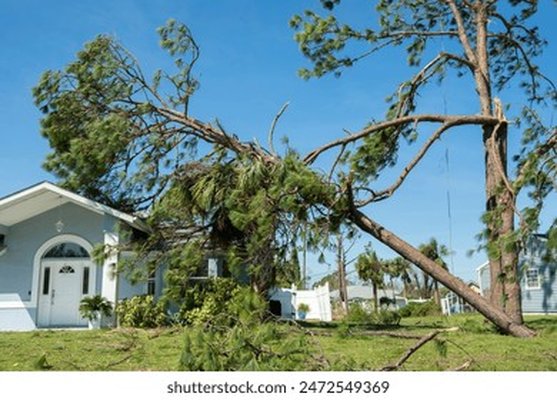
Then their basement flooded during a heavy rain. Not a sewer backup – just ground water seeping through the foundation. Their homeowners policy had a standard exclusion: groundwater. No coverage. The damage was about $28,000. They paid out of pocket.
A few months later, their son needed emergency surgery. The hospital was in-network, but the anesthesiologist wasn’t. Balance bill: around $9,000. Their health plan covered 80% of in-network rates, but out-of-network? Zero. They got stuck with the bill.
Then the husband lost his job. His group life insurance – two times salary – vanished with his last paycheck. He hadn’t bought individual life. He had a heart condition now, so new policies were expensive or denied. His wife went back to work full-time, but they had to drain their savings.
Three gaps. Three different policies. All could have been fixed with better planning and a few hundred dollars a year.
That’s why I built the Coverage Gap Calculator. Not to sell you anything – just to show you where you’re exposed.
I ran the Parkers’ situation through the calculator after the fact. Their risk score was 78 out of 100 – dangerously high. A few specific gaps: no flood endorsement, no out-of-network protection, no individual life insurance. Fixing those would have cost about $600 a year, maybe more depending on your area. Instead, they paid $28k plus $9k plus lost savings.
Someone I worked with – let’s call her Linda – used the calculator last year. She was a single homeowner in Lincoln Park. She thought her condo policy was solid. The tool asked: “Do you have loss assessment coverage?” She said “what’s that?” That’s coverage for when the condo association’s master policy has a deductible for a common-area claim. If a fire starts in a neighbor’s unit and damages the hallway, the association might charge each owner a special assessment. Without loss assessment coverage, you pay out of pocket. Linda had none.
She added it for $40 a year. Six months later, a pipe burst on the third floor, flooded four units, and the association levied a $7,000 special assessment. Linda’s policy paid all but a $250 deductible. She called me and said “that calculator saved me seven grand.”
So let me walk you through the most common gaps I see – the ones that show up in almost every review.
Gap one: home insurance – water and sewer backup. Most standard policies exclude water that comes from outside your home – groundwater, surface water, sewer backup. You need a separate endorsement. In Chicago, with our aging sewer systems, this is critical. The endorsement costs around $50-100 a year. Without it, a basement flood is entirely on you.
Gap two: home insurance – replacement cost vs. actual cash value. If your ten-year-old roof gets damaged, actual cash value means the insurer pays what that roof is worth today – maybe 30% of what you paid. Replacement cost means you get the money to put on a new roof. The price difference is small. The payout difference is huge.
Gap three: auto – uninsured/underinsured motorist. Illinois has about 14% uninsured drivers. If someone without insurance hits you, your collision coverage won’t pay for medical bills. Uninsured motorist coverage does. It’s cheap – often under $50 a year. I’ve seen people skip it to save money, then get T-boned by an unlicensed driver and end up with $50k in hospital bills.
Gap four: auto – rental reimbursement. Your car is in the shop for three weeks after an accident. Do you have a second car? Can you borrow from a friend? Rental reimbursement costs about $20 a year and gives you $30-50 a day for a rental. Most people don’t need it, but those who do are glad they have it.
Gap five: life – portability. That group policy through work ends when you quit or get fired. If you develop a health condition while employed, you might not be able to buy new life insurance. Some group plans allow you to convert to an individual policy when you leave – but the rates can be 5-10 times higher. Better to own a separate term policy outside of work.
Gap six: health – out-of-network maximum. Many plans have no out-of-network out-of-pocket max. That means you could be billed unlimited amounts. If your plan has a narrow network, make sure you understand the penalties for going outside it. Some plans cover emergencies out-of-network at in-network rates, but elective care is a different story.
Gap seven: health – prescription drug formulary. Just because a drug is covered this year doesn’t mean it will be next year. Before open enrollment, check the formulary for your medications. I’ve seen people pick a plan because the premium was low, only to find out their $500/month asthma medication wasn’t covered. The out-of-pocket cost would have been more than the premium savings.
Now, you don’t need to fix every gap at once. That’s overwhelming. Use the Coverage Gap Calculator to prioritize. The tool gives you a risk score for each category. Focus on the highest risk areas first.
I remember a couple – let’s call them Mike and Jen – who came to me after a near-miss. Their daughter had an allergic reaction and needed an ambulance. The ambulance was out-of-network for their health plan. They got a bill for $2,400. Their insurance paid none of it. They didn’t know that ambulance services are often out-of-network even if the hospital is in-network. The gap? They didn’t have an “ambulance rider” or a plan with emergency services covered at in-network rates. They added a supplemental accident policy for $8 a month. Now they’re protected.
So here’s your twenty-minute checklist. Pull out your phone or a piece of paper. Answer these questions. If you answer “no” or “I don’t know” to any, that’s a gap.
For home: Do you have sewer/water backup coverage? Is your dwelling covered at replacement cost, not actual cash value? Do you have at least $300,000 in liability? If you have a condo, do you have loss assessment coverage?
For auto: Do you have uninsured/underinsured motorist coverage? Do you have rental reimbursement? Is your deductible affordable ($500 or less)? Are you carrying collision/comprehensive on a car worth less than $4,000? (If yes, consider dropping it – you’re overpaying.)
For life: Do you have individual term life outside of work? If you have only group life, could you convert it if you left your job? Does your spouse have coverage?
For health: Does your plan cover out-of-network emergency care at in-network rates? Are your prescription drugs on the formulary? Do you know your out-of-pocket maximum?
That’s it. Twenty minutes. Most people discover at least two gaps.
A friend of mine – not a client, just a guy – did this audit last month. He discovered his auto policy had no uninsured motorist coverage. He added it for $36 a year. Two weeks later, an unlicensed driver rear-ended him on the Eisenhower. The other driver had no insurance. My friend’s uninsured motorist coverage paid his medical bills – about $12,000. He texted me: “I owe you a beer.”
You don’t need to become an insurance expert. You just need to know what you don’t know. The Coverage Gap Calculator does the heavy lifting. Spend twenty minutes this weekend. Run it. Then fix one thing. Just one. That’s how you start.
P.S. The Parkers – the ones with the flood and the anesthesiologist? They eventually moved to a rental. Their credit took a hit from the unpaid medical bills. They’re rebuilding now. But they told me “if we had known about the gaps earlier, we would have spent the $600.” That’s the thing about prevention – you only appreciate it after the fact.
By Marcus