Why My Home Insurance Claim Got Denied After the Chicago Heat Dome—And What I Did About It
Marcus Whitfield
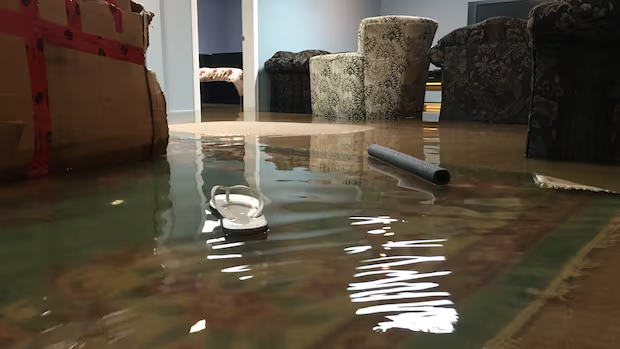
The adjuster looked at my basement and said the magic words: "Not covered." I stood there in two inches of water, the smell of mildew already rising from the carpet, and I felt something break inside me. Not the basement. That was already broken. Something in my chest. The adjuster was a young guy, maybe twenty-five, wearing a polo shirt with the insurance company logo and an expression that said he'd delivered this news a hundred times that week. "Heat-related expansion damage is excluded under your policy," he said, reading from a tablet. "The language is clear." I wanted to grab the tablet and throw it into the water. Instead, I asked him to show me the language. He did. And there it was, on page 47 of a 120-page document I'd signed three years ago without reading: "Damage caused by gradual temperature-related expansion or contraction of building materials is not covered." The heat dome had pushed my foundation to its limit. The concrete expanded. The cracks formed. The water came in. And my insurance company, which I'd paid $2,400 a year to protect me from disasters, told me to fix it myself.
I've lived in Chicago for twenty years. I know heat. I know humidity. I know the way the city traps warmth between the buildings and the lake and the expressways. But I didn't know that heat could destroy a foundation. Not fire. Not flood. Just heat. The sustained temperatures in July 2026—nine consecutive days over 95°F, three days over 102°F—caused the soil around my house to dry out and shrink. My foundation, which had been stable for forty years, settled unevenly. The concrete cracked. The waterproofing failed. And when the first big rain came after the heat wave, the water had a direct path into my basement. It wasn't a flood, technically. It was seepage. Seepage caused by heat-driven soil contraction. And seepage, caused by heat, is apparently not a covered peril.
I started calling other homeowners. My neighbor across the street had the same problem. So did the woman three houses down. The guy on the corner had it worse—his foundation had shifted so much that his front door wouldn't close. We were all in the same boat, and the boat was sinking into heat-shrunken soil. I started a spreadsheet. By the end of the week, I had twenty-three houses in my neighborhood with heat-related foundation damage. Twenty-three. On one block. And every single one of us had gotten the same answer from our insurance companies: not covered. The language was slightly different from company to company. Some called it "gradual damage." Some called it "maintenance-related." Some called it "earth movement" with a heat exemption. But the result was identical. We were on our own.
I called a public adjuster. That's a person who works for you, not the insurance company, to negotiate claims. He charged 10% of the settlement, which sounded like a lot until he explained that without him, the settlement was zero. He reviewed my policy. He reviewed the damage. He hired a structural engineer to write a report. The engineer found that the soil shrinkage was directly caused by the sustained heat and lack of rainfall. He found that the cracks were new, not pre-existing. He found that the waterproofing had been intact before the heat wave. And he found that the total damage was $18,400. The public adjuster submitted a new claim with the engineer's report. The insurance company denied it again. This time they cited "policy language" and "precedent." The precedent, apparently, was that insurance companies don't pay for heat.
I started researching. I found that climate-related insurance claims are a growing battlefield. In California, homeowners are fighting with insurers over wildfire damage. In Florida, it's hurricane exclusions. In Texas, it's hail and wind. And now, in the Midwest, it's heat. The insurance industry is scrambling to keep up with a climate that's producing perils they never modeled for. Foundation damage from heat domes? That wasn't in the actuarial tables. Shrink-swell soils affected by sustained drought and heat? That's a geological process, not a weather event, and geological processes are almost always excluded. The insurance companies are using the language of the past to deny claims caused by the climate of the present. And homeowners are paying the price.
I filed a complaint with the Illinois Department of Insurance. That was a process. Forms. Documentation. Phone calls. More phone calls. The department assigned an investigator who asked me to send every piece of paper I had. I sent 147 pages. The investigator called me back three weeks later and said the insurance company was "within their rights" based on the policy language. I asked if the language was fair. She said fairness wasn't her department. She said her department was whether the company followed the law. They did. The law, apparently, allows insurance companies to sell policies that exclude the primary climate threat facing the region. That's not illegal. It's just unethical. And expensive. For me, not for them.
I ended up paying for the repairs myself. $18,400. I took out a home equity line of credit. My basement is fixed now. The cracks are sealed. The waterproofing is new. The carpet is gone, replaced by tile that won't mold if it gets wet again. But I'm $18,400 in debt because my insurance policy, which was supposed to protect me from unexpected disasters, had a loophole big enough to drive a heat dome through. And I'm not alone. The National Association of Insurance Commissioners is tracking a spike in climate-related claim disputes. The Consumer Federation of America has identified heat damage as an emerging coverage gap. And the insurance industry is lobbying state legislatures to maintain the exclusions, arguing that covering heat-related damage would make premiums unaffordable. Unaffordable for whom? I already pay $2,400 a year for a policy that doesn't cover the most likely disaster I'll face.
I started reading my policy. Like, actually reading it. All 120 pages. It's a nightmare. The exclusions section is longer than the coverage section. It excludes flood, unless it's sudden and accidental. It excludes earthquake, unless you buy a rider. It excludes mold, unless it's caused by a covered peril. It excludes wear and tear, which is defined as anything that happens gradually. And it excludes "temperature-related expansion or contraction," which is what happened to my foundation. The policy covers fire, lightning, wind, hail, vandalism, and theft. It does not cover the thing that actually destroyed my basement. The thing that is going to happen more often as the climate warms. The thing that just affected twenty-three houses on my block.
I started shopping for new insurance. That was another education. Most companies use the same exclusions. Some won't write policies in Chicago at all anymore, citing "increasing climate risk." The ones that will write policies charge more and cover less. I found one company that offered a "heat rider" for an additional $340 a year. It covers foundation damage from sustained temperatures above 95°F. I bought it. I hate that I had to buy it. I hate that it's an add-on, like heated seats in a car, instead of standard coverage. But I bought it because I can't afford another $18,400 surprise. And because the next heat wave is coming. The climate models say Chicago will have twice as many 95-degree days by 2030. My foundation can't take that. My wallet can't take that. And my blood pressure definitely can't take another conversation with an adjuster in a polo shirt.
The broader issue is that our insurance system is designed for a stable climate. It assumes that disasters are rare, localized, and predictable. It assumes that a homeowner in Chicago is at risk of fire and theft, not sustained heat-driven soil shrinkage. It assumes that the exclusions written in the 1990s still make sense in the 2020s. They don't. The climate has changed. The risks have changed. And the insurance industry is responding by narrowing coverage, raising premiums, and denying claims that don't fit the old models. They're not adapting. They're retreating. And homeowners are left holding the bag—or the wet carpet, or the cracked foundation, or the equity line of credit.
I joined a neighborhood group. We're twenty-three households now, all with the same story. We're talking to a lawyer about a class action. We're talking to our state representative about legislation to mandate heat-related coverage. We're talking to the media. We're doing everything we can to make this visible, because the insurance companies are counting on us being too tired, too busy, too overwhelmed to fight. And most of us are. I have a job. I have a family. I have a basement that still smells faintly of mildew no matter how much I clean it. I don't have time to be a climate activist. But I also don't have $18,400 to throw at a problem my insurance company created by selling me an obsolete policy.
So here's what I learned. Read your policy. Not the summary. The actual policy. The 120-page document with the exclusions. Look for heat-related language. Look for "gradual damage" exclusions. Look for "earth movement" exemptions. Look for anything that lets the company deny a claim based on temperature. And if you find it, call your agent. Ask about riders. Ask about add-ons. Ask what happens if the foundation cracks because the soil shrinks in a heat dome. If they can't give you a straight answer, find another company. Because the next heat wave is not a matter of if. It's a matter of when. And when it comes, you don't want to be standing in two inches of water, listening to a guy in a polo shirt tell you that your policy doesn't cover the climate.
Has anyone else fought with their insurance company over heat damage? Because I'm starting to think we need a homeowner's union. And I'm willing to organize it.
The thing that really broke me was talking to my father. He's seventy-two. He's lived in the same house in Oak Park for forty years. He called me last week because his basement was flooding too. Same problem. Heat. Shrinkage. Cracks. Water. He'd called his insurance company. Same answer. Not covered. He doesn't have $18,400. He doesn't have a home equity line of credit. He's on a fixed income. And now he's looking at a basement full of water and mold and the possibility that his house, the house he raised me in, is structurally compromised. I told him I'd help. I told him I'd pay for it. But I can't pay for twenty-three houses. I can't pay for every retiree in Chicago whose insurance policy just became a piece of paper with no value. And I shouldn't have to. That's what insurance is for. That's the entire point of the system. We pool our risk. We pay our premiums. And when the disaster happens, the company pays. Except they're not paying. They're finding reasons not to pay. And those reasons are written in language that was designed for a world that no longer exists.
I started looking at the actuarial side of this. Insurance companies use catastrophe models to predict risk. These models are based on historical data. Historical data from a time when Chicago had an average of two days per year over 95°F. In 2026, we had nine. In 2025, we had six. In 2024, we had four. The trend is clear. The models are wrong. But the companies are still using them because changing the models would mean admitting that the risk is higher than they priced for. And admitting that would mean raising premiums. And raising premiums would mean losing customers. So they keep the old models, sell the old policies, and deny the new claims. It's a shell game. And the homeowners are the marks.
The public adjuster told me something that stuck with me. He said, "Insurance companies don't make money by paying claims. They make money by collecting premiums and investing them. Every claim they deny is profit. Every exclusion they write is profit. And climate change is the best thing that ever happened to their bottom line, because it creates damage that their policies don't cover." I don't know if that's cynical or accurate. Probably both. But it explains why the industry is fighting so hard to maintain heat-related exclusions. It's not about affordability. It's about profitability. And our basements are collateral damage.
I started documenting everything. Photos. Videos. Emails. Letters. The engineer's report. The adjuster's notes. The denial letters. The complaint to the Department of Insurance. The response from the Department of Insurance. I'm building a case. Not just for me, but for the class action. Because the law says that insurance policies must be interpreted in favor of the insured when language is ambiguous. And "temperature-related expansion or contraction" is ambiguous. It could mean the expansion of a pipe in winter. It could mean the contraction of soil in summer. The policy doesn't specify. The company says it means both. We say it means neither, or at least it should be clarified in the insured's favor. A judge will decide. Eventually. In two or three years. Meanwhile, my basement is fixed and my HELOC is accruing interest.
The emotional toll is real. I wake up at 3 AM thinking about the $18,400. I check the weather forecast obsessively, looking for the next heat wave. I walk around my house looking for cracks. I measure the gaps around my doors. I listen to the foundation settle. I used to love summer. Now I dread it. Not because of the heat itself, but because of what the heat does to my house, my finances, and my sense of security. I paid for security. I paid $2,400 a year for the promise that if something bad happened, I wouldn't be alone. And now I know that promise was empty. That the policy I trusted was written for a different climate, a different era, a different world. And that the company that sold it to me has no intention of honoring the spirit of the agreement, only the letter. And the letter says I'm not covered.
So here's my advice. Read your policy. Not the marketing materials. Not the agent's summary. The actual policy. Look for heat-related exclusions. Look for "gradual damage" language. Look for "earth movement" exemptions. If you find them, ask about riders. If your company doesn't offer a heat rider, consider switching. And if you can't switch because no one will write a policy in your area anymore—which is happening in California, Florida, and increasingly in the Midwest—then start saving. Build an emergency fund specifically for climate damage. Because your insurance company is not going to save you. They're going to send a guy in a polo shirt to tell you why they can't help. And you're going to be standing in water, holding a useless piece of paper, wondering where the system went wrong.
I'm still fighting. The class action is moving slowly. The legislation is stalled in committee. The media coverage was one day, then nothing. But I'm not giving up. Because this isn't just about my basement. It's about the fundamental contract between homeowners and insurers. It's about whether insurance still means what it says. And it's about whether we're going to let the industry write itself out of the climate crisis while we pay the premiums and absorb the losses. I say no. I say fight. I say read the fine print, organize your neighbors, and make noise until they can't ignore you anymore. Because the heat is coming. And we need coverage that actually covers it.
